When property owners think about Energy Performance Certificates (EPCs), they often focus only on compliance. However, a poor EPC rating can lead to a range of hidden costs that impact both short-term finances and long-term property value. In 2026, these hidden costs are becoming more significant as energy efficiency takes center stage in the property market.
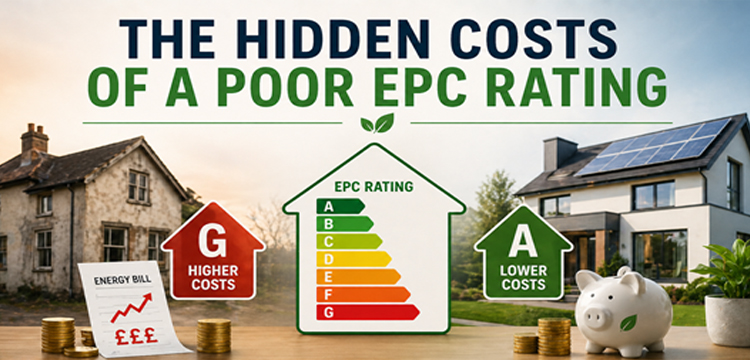
One of the most immediate impacts of a low EPC rating is higher energy bills. Properties rated E, F, or G tend to lose heat quickly and require more energy to maintain comfortable temperatures. This not only affects tenants but also makes the property less attractive in a competitive rental or sales market. As energy prices continue to fluctuate, inefficient properties become increasingly expensive to run.
Another hidden cost comes in the form of reduced property demand. Buyers and tenants are now more informed and actively compare EPC ratings before making decisions. A low rating can lead to longer vacancy periods or extended time on the market, forcing owners to lower rental prices or accept reduced offers. Over time, this can significantly impact overall returns on investment.
Maintenance and repair costs can also be higher in properties with poor EPC ratings. Older systems and inefficient structures often require frequent repairs, adding to ongoing expenses. In contrast, energy-efficient properties with modern systems tend to be more reliable and cost-effective to maintain.
Regulatory risks are another important factor. Governments are continuously tightening energy efficiency standards, especially for rental properties. Owners of poorly rated properties may face fines, penalties, or restrictions if they fail to meet minimum requirements. This can lead to unexpected expenses or forced upgrades under tight deadlines.
There is also the issue of limited financing options. Many lenders are beginning to consider EPC ratings when approving mortgages or loans, particularly for investment properties. A low EPC rating can reduce borrowing options or lead to less favorable terms, making it harder to finance property purchases or improvements. In conclusion, a poor EPC rating carries more than just surface-level disadvantages. From higher energy costs and reduced demand to regulatory risks and financing challenges, the financial impact can be substantial. Improving energy efficiency is not just about meeting requirements—it is a smart investment that protects property value and ensures long-term profitability in an increasingly energy-conscious market.