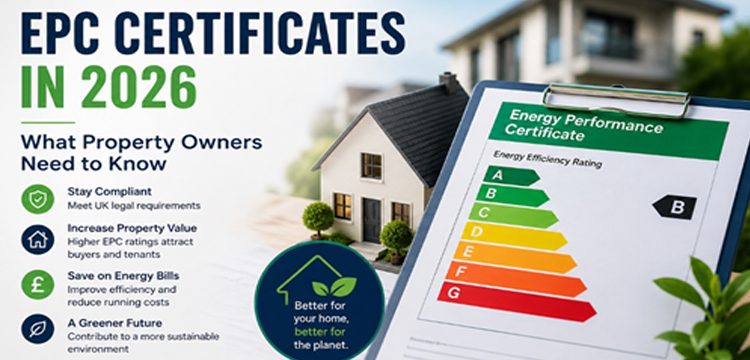
Energy efficiency has become a central part of property ownership in the UK, making Energy Performance Certificates (EPCs) more important than ever in 2026. An EPC provides a clear rating of a property’s energy efficiency, ranging from A (most efficient) to G (least efficient), along with insights into energy usage, estimated costs, and recommendations for improvement. It is a legal requirement when selling, renting, or constructing a property, and remains valid for ten years. However, beyond compliance, EPCs now play a significant role in influencing property value, tenant interest, and overall marketability.
With rising energy costs and increasing focus on sustainability, property owners are under more pressure to ensure their buildings meet acceptable efficiency standards. Buyers and tenants are actively looking for properties that offer lower running costs, making higher EPC ratings a strong advantage in today’s market. At the same time, regulations are expected to become stricter, particularly for landlords, which means staying proactive about energy performance is essential to avoid future compliance issues or potential penalties.
Improving an EPC rating does not always require major renovations. Simple and cost-effective upgrades such as installing LED lighting, improving insulation, upgrading heating systems, or sealing drafts can significantly enhance a property’s efficiency. These improvements not only help achieve a better EPC rating but also reduce long-term energy expenses, making the property more attractive and cost-effective to run.
Obtaining an EPC is a straightforward process that involves booking an accredited assessor, completing a property inspection, and receiving the certificate digitally, usually within 24 to 48 hours. Working with a reliable service provider ensures accuracy, speed, and full compliance with UK regulations, helping property owners avoid unnecessary delays during transactions.
In today’s evolving property landscape, an EPC is no longer just a legal formality. It is a valuable tool that reflects a property’s efficiency, impacts financial performance, and supports sustainability goals. Staying informed and maintaining a valid EPC can help property owners remain competitive, compliant, and better prepared for future regulatory changes.